
What High-End Buyers Should Know About Key West Luxury Real Estate
Key West luxury real estate starts around $1.5 million and spans historic Old Town conch homes, waterfront estates, and elevated new construction. Inventory is tight, cash buyers are common, and the median sale price across the broader market sits at $1 million, making Key West one of the priciest small-city luxury markets in the country.
What should a luxury buyer expect from the Key West real estate market?
Key West luxury real estate is defined by scarcity, historic character, and a price floor that sits well above most of Florida. Serious luxury starts around $1.5 million, with core waterfront and Old Town properties trading in the $3 million to $5 million range and beyond. Inventory is thin, cash buyers are common, and the lifestyle, walkable, coastal, and genuinely one-of-a-kind, is a large part of what buyers are paying for.
Key Takeaways
- The median sale price in Key West is $975,000 based on recent local market data (trailing ~90 days, as of September 2026), meaning million-dollar pricing is common rather than exceptional here.
- Homes in Key West are selling in a median of 28 days, faster than neighboring areas like Cudjoe Key (60 days) or Big Pine Key (45 days), which reflects strong demand for well-priced inventory.
- Luxury in Key West spans three distinct property types: historic Old Town conch homes, waterfront and harbor-front estates, and newer elevated construction, each with different trade-offs on character, maintenance, and insurance exposure.
- South Florida luxury single-family sales rose year-over-year in Q1 2026, with some coastal subregions posting double-digit increases in luxury transactions, according to a Q1 2026 report by The Keyes Company and Illustrated Properties.
- Three major Florida Keys luxury resorts changed hands within roughly three months in mid-2026 for a combined value near $500 million, signaling strong institutional confidence in the Keys as a premium market defined by scarcity.
What does "luxury" actually mean in Key West, and where does the market stand in 2026?
In most Florida markets, "luxury" is a label agents put on anything with a nice kitchen. In Key West, it means something different, and more expensive.
Recent local market data puts the Key West median sale price at $975,000 (trailing roughly 90 days, as of September 2026). That's the median. Which means half of what sells here trades above that number. When I tell buyers that Key West is one of the priciest small-city markets in the country, this is what I'm pointing to.
For practical purposes, I think about the luxury segment in three tiers:
- High-end entry ($1.5M–$3M): Renovated historic homes, updated canal-front properties, and quality newer construction. This is where most serious luxury buyers start their search.
- Core luxury ($3M–$5M): Premium Old Town locations, harbor-front exposure, and homes with genuine resort-style amenities, pools, guest cottages, outdoor kitchens, and real parking.
- Ultra-luxury ($5M+): A thin, highly prized inventory of trophy properties. These rarely appear, and when they do, the right buyer needs to move with conviction.
The broader regional picture backs up what I'm seeing locally. According to a Q1 2026 luxury report from The Keyes Company and Illustrated Properties, South Florida luxury single-family sales rose year-over-year, with some coastal subregions posting double-digit increases in luxury transactions. Key West fits squarely in that coastal-premium story.
And it's not just residential buyers paying attention. Three major Florida Keys luxury resorts, Pier House in Key West, Cheeca Lodge and Spa in Islamorada, and The Islands of Islamorada, changed hands within about three months in mid-2026, with combined deal values reported near $500 million. That kind of institutional capital doesn't flow into a market without conviction. Investors are betting on the same thing individual buyers are: a genuinely scarce supply of premium real estate in a location that can't be replicated.
How does Key West compare to other areas in the Keys?
Key West isn't the only market worth watching in the Lower Keys, but it does carry a premium that reflects its urban-island character and walkability. Here's how recent median sale prices stack up across the areas I work:
|
Area |
Median Sale Price |
Median Days on Market |
|
Key West |
$975,000 |
28 |
|
Cudjoe Key |
$937,500 |
60 |
|
Summerland Key |
$1,100,000 |
49 |
|
Big Pine Key |
$801,500 |
45 |
Source: Recent local market data, trailing ~90 days as of September 2026. Area-level medians, individual home values vary by condition, street, and timing.
Key West's 28-day median is notably faster than the surrounding areas. That pace reflects real demand for well-priced, well-located product. It also means that when a genuinely exceptional property hits the market, hesitation costs you.
What kinds of properties make up the Key West luxury market, and what does ownership actually involve?
Historic Old Town conch homes
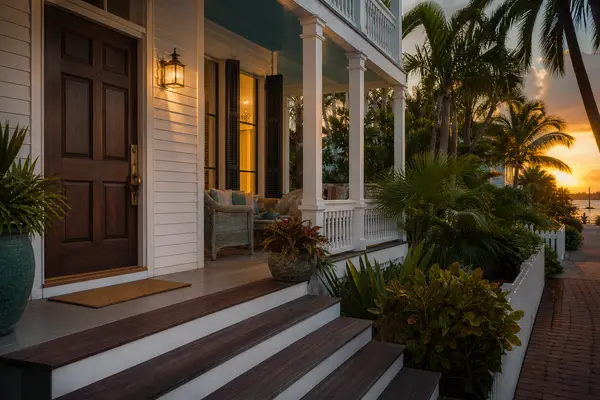
Old Town is where Key West luxury begins for most buyers, and for good reason. These homes, many of them 100-plus years old, carry a character you simply can't build from scratch. Wide porches, Dade County pine interiors, lush tropical landscaping, and proximity to the harbor and Duval Street all factor into the premium.
The best Old Town luxury homes pair that historic bones with genuinely modern interiors: updated kitchens, resort-style pools, outdoor kitchens, and guest cottages that function as income suites or private retreats. When those two things come together in a good location, they move fast.
What buyers need to understand going in: older structures carry older-structure costs. Salt air, tropical humidity, and decades of deferred maintenance (on someone else's watch) can add up. If you're looking at a historic home at $3 million, I'd want you thinking about the full cost of ownership, not just the purchase price.
Waterfront and harbor-front estates
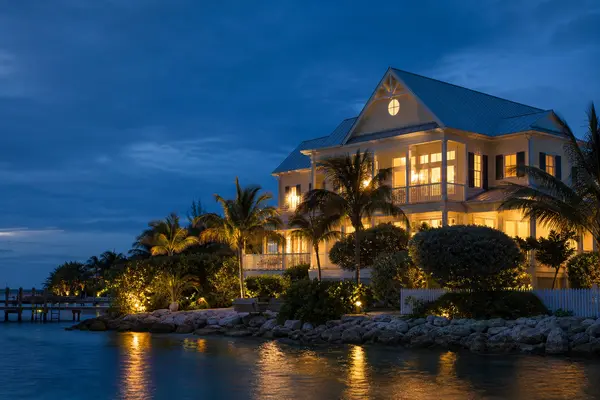
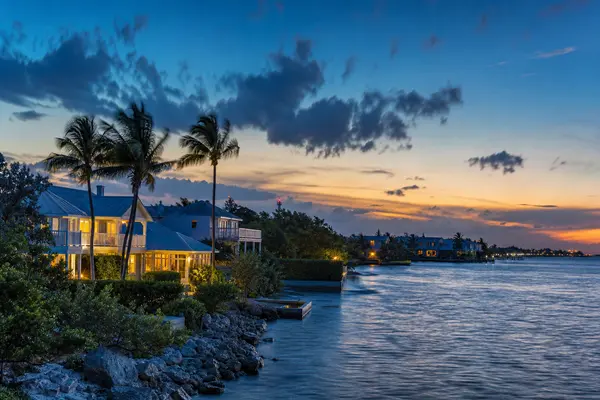
For buyers who want boating access, deep-water dockage, and genuine privacy, the waterfront segment is its own category. These properties trade on location in a way that even the best Old Town home can't match, and they're priced accordingly.
Waterfront luxury in Key West is a thin inventory. When a harbor-front estate becomes available, serious buyers need to be positioned to act. That means financing pre-arranged (or cash ready), a clear sense of your priorities, and an agent who knows the difference between a dock that actually works and one that photographs well.
Elevated new construction
A growing segment of the Key West luxury market is newer elevated construction, homes built to current codes with impact glass, elevated foundations, and modern systems. These properties appeal to buyers who want luxury without the maintenance unknowns of a century-old structure.
The trade-off is character. New construction in Key West rarely has the walkability or streetscape presence of Old Town. But for buyers who are weighing insurance exposure and long-term maintenance costs, the math can favor a newer build. I walk every buyer through that comparison directly, because the right answer depends entirely on your priorities.
What ownership really costs beyond the purchase price
This is the conversation I have with every luxury buyer before we go any further. The purchase price is the beginning, not the end.
High-end ownership in Key West comes with real ongoing costs:
- Insurance: Flood insurance, windstorm coverage, and homeowners insurance in Monroe County are significant line items, and they vary considerably depending on your home's elevation, age, and construction. I always tell buyers to factor flood zones and insurance costs into their budget from day one, not as an afterthought after you've fallen in love with a house. Our post on property insurance in Key West covers this in detail.
- Hurricane preparedness: Impact glass, shutters, and generator systems are standard in quality luxury homes. If a home you're considering doesn't have them, budget for them.
- Salt-air maintenance: Exterior finishes, hardware, HVAC systems, and landscaping all take a beating in a marine environment. Luxury owners here typically budget for professional property management, especially if they're not full-time residents.
- Rental regulations: If you're buying with any eye toward short-term rental income, understand the local rules before you make an offer. Key West's vacation rental regulations are specific and consequential, our post on short-term rental rules and Florida Keys luxury real estate is the right place to start.
Transaction dynamics: cash, competition, and negotiation
The luxury segment in Key West skews heavily toward cash buyers. That's not a rumor, it's the reality of a market where a significant share of demand comes from second-home, vacation, and investment buyers who aren't dependent on financing. If you're bringing a loan, that doesn't disqualify you, but it does mean your offer needs to be structured thoughtfully. Financing contingencies can weaken a bid on the most coveted properties.
The negotiation environment is more nuanced than "it's all bidding wars." Turn-key, well-located homes in the right price tier move quickly and with limited room to negotiate. Properties with ambitious list prices or deferred maintenance tend to sit longer, even in a scarce market, and that's where a buyer with patience and a good read on value can find real opportunity.
Your specific leverage depends on the property, the seller's timeline, and current inventory. That's exactly the kind of analysis I do with clients before we ever put pen to paper.
Ready to talk through what the luxury market looks like for your specific situation? Call me directly at (305) 766-0585 and let's run through it together.
If you'd like to read what past clients have said about working with me, you can find my reviews on Google and Zillow.
FAQ: Key West Luxury Real Estate
What price point counts as "luxury" in Key West, and how is that different from the rest of Florida?
In Key West, luxury begins where most Florida markets' upper-middle segments end. The area median sale price sits at $975,000 based on recent local market data, so million-dollar pricing is common rather than exceptional. Most local reports define the luxury segment starting around $1.5 million, with core luxury properties, premium Old Town locations and waterfront estates, trading in the $3 million to $5 million range. In contrast, many Florida inland markets define luxury at $600,000 to $800,000, making Key West one of the highest-threshold luxury markets in the state.
How competitive is the high-end market in Key West right now?
The Key West market is defined by tight inventory and a median of just 28 days on market, which means well-priced, well-located luxury properties move quickly. That said, the market is not uniformly competitive, turn-key homes in prime locations attract the most urgency, while overpriced or project-condition properties can sit even in a scarce market. Buyers above $2 million should expect to compete with cash offers and should have their financing or liquidity clearly established before identifying a target property.
What kinds of properties make up the luxury segment in Key West?
The Key West luxury market spans three main property types: historic Old Town conch homes (prized for walkability, character, and proximity to the harbor), waterfront and harbor-front estates (valued for boating access, privacy, and deep-water dockage), and newer elevated construction (appealing for modern systems, lower maintenance risk, and current building codes). Each type involves different trade-offs on character, insurance exposure, and long-term cost, the right fit depends entirely on how you plan to use the property.
How long do luxury homes in Key West typically stay on the market?
The overall Key West median is 28 days on market based on recent local data, but that figure masks a real split within the luxury tier. Turn-key homes in desirable Old Town or waterfront locations can go under contract in days when priced correctly. Properties with unique attributes, significant renovation needs, or aggressive list prices tend to sit considerably longer, sometimes well past 60 or 90 days. The takeaway: pricing and condition still matter even at the top of the market.
Are most luxury purchases in the Florida Keys cash deals?
A high share of luxury transactions in the Keys are cash purchases, reflecting the dominance of second-home, vacation, and investment buyers who are not reliant on financing. This is especially true above $2 million. Financed buyers can absolutely compete, but the offer structure matters, minimizing contingencies and demonstrating strong pre-approval or proof of funds is essential in the most competitive situations. Your real estate attorney and lender should be lined up before you start making offers.
What should I expect for maintenance, insurance, and flood-elevation requirements on a high-end Key West home?
Ongoing ownership costs in Key West are real and should be budgeted seriously alongside the purchase price. Insurance, including flood, windstorm, and homeowners coverage, varies significantly based on a home's elevation, age, and construction type, and can be a substantial annual expense. Newer elevated construction generally carries lower insurance exposure than older, lower-elevation historic homes. Salt-air corrosion, hurricane preparedness (impact glass, shutters, generators), and tropical landscaping maintenance are additional line items that luxury owners here plan for year-round.
How does buying luxury in Key West compare to Miami or Naples?
Key West offers something Miami and Naples can't: a genuinely walkable, small-city island lifestyle with a finite land supply and no realistic path to new large-scale development. That scarcity is structural, not cyclical, and it's a core reason why institutional investors recently paid nearly $500 million for three Keys luxury resorts. Miami offers more inventory, more new construction, and a larger urban amenity set. Naples offers a quieter coastal lifestyle with larger lot sizes. Key West is its own category, smaller, more storied, and with a price-per-square-foot that reflects both the demand and the supply constraint.
About Jimmy Lane
Jimmy Lane is a Principal Broker whose passion for the Florida Keys runs deep. From Key West's beautiful beaches to its slower pace of life to its abundance of coastal amenities, he genuinely understands why buyers from across the country make the Keys their home, and he brings that firsthand knowledge to every transaction. Jimmy leads the Jimmy Lane Home Team.
Island Life Realty Experts · +1(305) 766-0585
Equal Housing Opportunity. Jimmy Lane is a Principal Broker licensed in Florida, regulated by the Florida Real Estate Commission. This article is general information only and does not constitute legal, tax, or financial advice. Confirm your specific costs, tax obligations, and transaction details with your real estate attorney, tax advisor, or lender.Categories
- All Blogs (34)
- flood insurance (1)
- Buying a Home (2)
- Florida Keys Real Estate (4)
- Investment Properties (1)
- Buyer Guides (1)
- Buyers Guide (1)
- Buying (2)
- Buying a Home in Key West (2)
- Buying in Key West (2)
- Buying in the Keys (1)
- Closing Costs (2)
- Costs & Financing (1)
- Cudjoe Key (1)
- flood insurance (1)
- Florida Keys flood zones (1)
- Florida Keys Market (3)
- Florida Keys Real Estate (3)
- Florida Keys Real Estate Costs (1)
- Florida Keys Real Estate Guide (1)
- Florida Keys Real Estate Tips (1)
- Hurricane Preparedness (1)
- Insurance (2)
- Insurance & Costs (2)
- Insurance & Flood Zones (1)
- Investment Properties (2)
- Key West (2)
- Key West buyers (1)
- Key West Market (1)
- Key West Real Estate (2)
- Luxury Real Estate (2)
- market insights (1)
- Market Trends (1)
- NFIP (1)
- Seller Resources (1)
- Selling (3)
- Selling / Seller Resources (2)
- Selling a Home in Key West (1)
- Selling in Key West (1)
- stock island (1)
- Tax & Legal (1)
- Tips for Buyers (1)
- Vacation Rental (1)
- vacation rental investment (1)
Recent Posts


GET MORE INFORMATION