
Why Local Expertise Matters When Buying Waterfront Homes in the Florida Keys
Buying waterfront homes in Florida Keys requires parcel-level flood-zone review, insurance analysis, boating-access verification, and comparable sales drawn from the same island, knowledge a local Keys expert carries and a generalist simply doesn't have.
Why does local expertise matter when buying waterfront homes in Florida Keys?
Buying waterfront homes in Florida Keys is not like buying a lakefront cabin in the Midwest or a beach condo in Miami. Every parcel sits inside a floodplain, flood elevations vary street by street, new coastal flood maps are in progress right now, and the difference between a canal with six feet of draft and one with two can determine whether your boat ever leaves the dock. A local expert doesn't just know the market, they know the water.
Key Takeaways
- Recent local market data shows a median sale price of $1,033,750 in the Key West area, with homes selling in a median of 35 days, a fast-moving market where preparation matters before you make an offer.
- All of Monroe County lies within a floodplain, with base flood elevations ranging from 6 to 17 feet above mean sea level, according to Monroe County, flood-zone review is not optional on any waterfront purchase.
- Monroe County announced in September 2026 that new preliminary coastal flood maps are expected before the current maps are finalized, buyers should confirm which map set their lender, insurer, and contractor are using.
- A renovation or addition that equals or exceeds 50% of a property's market value in a Special Flood Hazard Area may trigger current elevation requirements, a detail that can reshape the economics of buying an older Keys home.
- Area medians vary significantly across the Keys, from $750,000 in Big Coppitt to over $1,082,500 in Summerland Key, which is why comparable sales must be drawn from the same island, not a countywide average.
What makes waterfront homes in Florida Keys different from other waterfront markets?
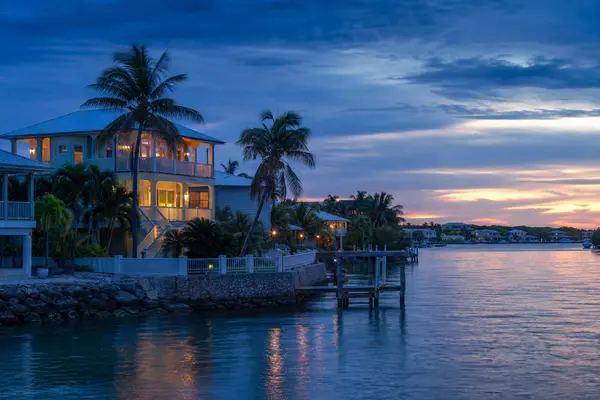
The short answer: almost everything. The Keys stretch over 100 miles of islands, each with its own canal networks, water depths, bridge clearances, housing age, and distance to open water. A property described as "waterfront" in one listing could mean oceanfront with direct Atlantic access, a canal-front lot where you'd need to navigate three miles of cuts to reach open water, or a bay-side lot with a shallow tidal flat that bottoms out at low tide.
I walk every waterfront buyer through a simple question first: what do you actually want to do with the water? The answer changes everything about which properties make the short list.
Flood zones are not a footnote, they're the foundation
Monroe County's own materials are unambiguous: the entire county lies within a floodplain, with base flood elevations ranging from 6 to 17 feet above mean sea level. Standard homeowners insurance does not cover flood damage. That means flood insurance is not a line item you add at closing, it's a number you need before you write an offer, because it directly affects your carrying costs and your lender's approval.
What makes this especially important right now: Monroe County reported in September 2026 that new preliminary coastal flood maps are expected before the current maps are finalized. If you're buying in October 2026, you need to know which map set your lender, insurer, and any contractor you're planning to hire are actually working from. A listing description that says "Zone X" based on an older map may look very different on the new one.
Monroe County also provides a parcel-level flood map and GIS tool through its Planning department. I always pull the exact parcel, not the neighborhood, not the mailing city, because flood elevations can change from one lot to the next on the same street. For a deeper look at how flood zones affect waterfront purchases here, my post on flood zones and Florida Keys waterfront homes walks through the mechanics in detail.
Renovation plans can change the math entirely
A lot of buyers come to me with an older Keys home and a vision for what they'll do with it. That's completely reasonable, many of the best waterfront properties here are 1960s and 1970s concrete-block homes with great bones and great locations. But there's a number you need to know before you start sketching floor plans.
Under Monroe County's substantial-improvement rules, when an improvement in a Special Flood Hazard Area equals or exceeds 50% of the property's market value, the structure may need to be elevated to meet current flood-elevation standards. That applies to additions, major remodels, enclosure conversions, and storm-damage repairs. On a $900,000 property, that threshold can be reached faster than buyers expect. A local agent who knows these rules can flag the issue before you're under contract, not after your contractor pulls a permit.
How does a local expert actually evaluate a waterfront property in the Keys?
Here's the workflow I use with buyers, grounded in what Monroe County's own guidance identifies as the critical due-diligence steps for waterfront properties here.
Step 1: Identify the exact waterfront type and intended use. Oceanfront, bay-front, canal-front, and open-water properties are not interchangeable. Canal orientation, turning basin size, bridge clearance, reported water depth, and tidal access all matter, especially if you're planning to keep a boat.
Step 2: Pull the parcel-level flood zone and elevation information. Not the neighborhood. Not the listing description. The actual parcel, using Monroe County's GIS tool, and confirmed against the current map set your lender and insurer are using.
Step 3: Get insurance quotes before you go under contract. Flood insurance costs in the Keys can vary significantly based on elevation, structure type, and the applicable flood zone. You need real numbers, not estimates, to know what you're actually buying.
Step 4: Review permits and prior improvements. Unpermitted work on a waterfront property, a dock addition, a seawall repair, an enclosure conversion, can create liability that transfers with the deed. A local agent knows what to ask for and what to flag.
Step 5: Inspect beyond the house. The seawall condition, dock and pilings, electrical service at the dock, roof age, and storm-hardening features are all part of a waterfront inspection. A general home inspector is a starting point, not the finish line.
Step 6: Compare with genuinely similar sales. This is where submarket knowledge is irreplaceable. A canal-front home in Big Coppitt does not comp against an oceanfront home in Summerland Key. The table below shows how much area medians vary across the Keys, and why countywide numbers are context, not comps.
|
Area |
Median Sale Price |
Median Days on Market |
|
Key West |
$1,000,000 |
54 |
|
Big Coppitt |
$750,000 |
60 |
|
Cudjoe Key |
$955,000 |
55 |
|
Summerland Key |
$1,082,500 |
49 |
|
Big Pine Key |
$880,000 |
49 |
Recent local market data puts the Key West area median at $1,033,750 with a median of 35 days on market. That pace means well-priced waterfront properties don't sit. If you're not ready to move quickly, with flood-zone review, insurance quotes, and financing lined up, you'll watch the right property go to someone who was.
If you're weighing specific areas, my post on buying waterfront homes in Cudjoe Key goes deep on one of the Lower Keys' most active waterfront submarkets.
Every situation is different, and the only way to know what a specific property is actually worth, and what it will cost to own, is to run the analysis with someone who knows this market at the parcel level. That's exactly the kind of work I do before my clients make an offer.
Read what past clients have said about working with me on Google and Zillow.
Frequently Asked Questions
How do I verify whether a Florida Keys waterfront home is in a flood zone?
Every property in Monroe County is in a floodplain, so the real question is which flood zone and what elevation applies to that specific parcel. Use Monroe County's parcel-level GIS flood map tool with the exact property address, and confirm the result with your lender and insurance broker, they may be working from a different map version than the listing describes.
What do the new Monroe County coastal flood maps mean for a home I want to buy?
Monroe County announced in September 2026 that new preliminary coastal flood maps are expected before the current maps are finalized, meaning a property's flood designation could change before you close. Ask your agent, lender, and insurer which map set they're using, and factor the possibility of a zone change into your insurance budgeting. A local agent familiar with the county's preliminary map process can help you interpret what the transition means for a specific property.
What should I inspect besides the house when buying a waterfront property in the Keys?
Beyond a standard home inspection, waterfront due diligence in the Keys should include the seawall condition and age, dock structure and pilings, electrical service at the dock, roof age and storm-hardening features, and any unpermitted prior improvements. The water itself matters too, canal depth, tidal access, bridge clearances, and distance to open water all affect how usable the frontage actually is for your intended boat or activity.
Can I add a dock or seawall to a waterfront property in the Florida Keys?
Dock and seawall work in Monroe County involves both county permitting and state or federal environmental review, depending on the scope and location. What's permitted varies by water body, lot configuration, and existing structures. Before you assume a property can accommodate the dock setup you want, have a local agent and a licensed contractor review the specific parcel, don't rely on what a neighboring property has or what a prior owner says was approved.
How do I know whether a canal is deep enough for my boat at low tide?
Reported canal depths in listings are not always current or accurate, and tidal variation in the Keys can be significant. I tell buyers to get a depth reading at the property during a low-tide visit, not just at the dock but along the route to open water, including any cuts or bridges you'd need to pass through. Your vessel's draft and any air-draft limitations (bridge clearance) should both be confirmed before you make an offer on a canal-front property.
The bottom line: waterfront homes in Florida Keys reward buyers who do the homework, parcel-level flood review, real insurance numbers, and comps from the same island. I've walked buyers through this process across Key West, Big Coppitt, Cudjoe Key, Summerland Key, Big Pine Key, and the rest of the Keys, and I know what separates a great waterfront buy from an expensive surprise. Call me directly and let's talk through what you're looking for.
About Jimmy Lane
Jimmy Lane is a Principal Broker whose passion for the Florida Keys runs deep, from Key West's beautiful beaches to the slower pace of island life to the abundance of amenities that make the Keys unlike anywhere else. He genuinely understands why buyers fall in love with this place, and he brings that firsthand knowledge to every waterfront transaction he handles.
Island Life Realty Experts · +1(305) 766-0585
Equal Housing Opportunity. Jimmy Lane is a Principal Broker licensed in Florida, regulated by the Florida Real Estate Commission. This article is general information only and is not legal, tax, or financial advice. Confirm your specific numbers and obligations with your real estate attorney, tax advisor, and lender before making any transaction decisions.
Categories
- All Blogs (43)
- flood insurance (1)
- Buying (2)
- Buying a Home (3)
- Florida Keys Real Estate (8)
- Investment Properties (1)
- Relocation (1)
- Selling a Home (1)
- Buyer Guides (1)
- Buyer Resources (1)
- Buyers Guide (1)
- Buying (3)
- Buying a Home in Key West (2)
- Buying in Key West (2)
- Buying in the Keys (1)
- Closing Costs (2)
- Costs & Financing (1)
- Cudjoe Key (2)
- flood insurance (1)
- Florida Keys flood zones (1)
- Florida Keys Living (1)
- Florida Keys Market (6)
- Florida Keys Real Estate (4)
- Florida Keys Real Estate Costs (1)
- Florida Keys Real Estate Guide (1)
- Florida Keys Real Estate Tips (1)
- Hurricane Preparedness (1)
- Insurance (2)
- Insurance & Costs (2)
- Insurance & Flood Zones (1)
- Investment Properties (2)
- Investment Real Estate (1)
- Investors (1)
- Key West (2)
- Key West buyers (1)
- Key West Market (1)
- Key West Real Estate (2)
- Luxury Real Estate (2)
- market insights (3)
- Market Trends (1)
- NFIP (1)
- Seller Resources (1)
- Selling (4)
- Selling / Seller Resources (2)
- Selling a Home in Key West (1)
- Selling in Key West (1)
- stock island (1)
- Tax & Legal (1)
- Tips for Buyers (1)
- Vacation Rental (1)
- vacation rental investment (1)
- Waterfront (1)
Recent Posts



GET MORE INFORMATION