
Hurricane Building Codes: Key West New Buyers Guide
Key West and Monroe County operate under the 8th Edition Florida Building Code, requiring homes in coastal zones to withstand ultimate design wind speeds of 130-140+ mph. New buyers should verify impact-rated glazing, roof permit history, flood zone status, and review both the state flood disclosure form and the seller's property disclosure before closing.
What do Key West's hurricane building codes mean for new home buyers?
Key West and Monroe County fall under the 8th Edition Florida Building Code (effective 2023), which sets ultimate design wind speeds of 130-140+ mph for coastal exposure zones. Homes built or substantially renovated under these standards must have impact-rated windows and doors, engineered roof systems with hurricane straps, and elevated construction above base flood elevation. As a buyer, understanding what those requirements mean in practice, and how to verify compliance, is one of the most important steps you can take before making an offer.
If you're shopping for a home in Key West, Stock Island, Big Coppitt, or anywhere else in the Lower Keys, this post walks you through exactly what to look for, what the disclosure laws now require sellers to tell you, and how to use all of it to protect your investment.
What the 8th Edition Florida Building Code Actually Requires Here
The Florida Building Code isn't one-size-fits-all. The Keys sit in some of the most demanding wind exposure categories in the country, and the code reflects that.
Under the 2023 Florida Building Code (8th Edition), structures in coastal exposure zones like Key West must be designed to withstand ultimate design wind speeds (Vult) of 130 to 140+ mph. For structures within one mile of the mean high-water line, which covers most of the Keys, additional requirements apply based on exposure conditions. That means stricter standards for roof-to-wall connections, window and door openings, and continuous load paths throughout the structure.
In practice, here's what a code-compliant Key West home should have:
- Impact-rated glazing or code-approved shutters on every opening, windows, doors, sliders, and garage doors. Ask for Florida Product Approval numbers and documentation that windows meet ASTM E1886/E1996 impact standards.
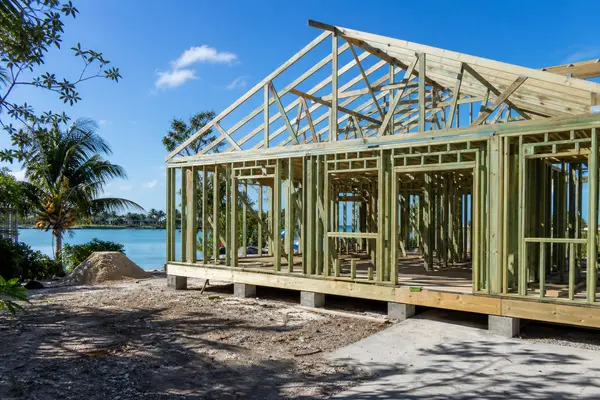
- Hurricane straps and truss tie-downs connecting the roof system to the walls, with proper roof decking attachment and a secondary water barrier.
- Elevated construction above base flood elevation (BFE), with flood-resistant materials used below that line, consistent with Monroe County's Building Responsibly guidance.
- Raised electrical and mechanical systems, panels, HVAC equipment, and water heaters positioned above anticipated flood levels.
- Licensed contractors for all work. Monroe County's guidance is explicit on this point, and it matters for permit compliance and insurance.
Homes built or substantially reconstructed after the major Florida Building Code overhauls, particularly post-2002 and again after the 8th Edition took effect in 2023, are more likely to meet these standards. For older homes, the key question is whether significant improvements like window replacements or re-roofing were done with permits and passed final inspection. I pull Monroe County building permit history on every home I show, and I'd encourage any buyer to make that a standard step.
What about older Conch-style homes?
This is one of the most common questions I get. Older Conch-style homes weren't built to today's wind standards, but that doesn't automatically make them unsafe or uninsurable. What matters is the renovation history. A well-documented retrofit, permitted impact windows, a roof replaced under modern code, properly connected structural elements, can bring an older home much closer to current resilience standards. The paper trail is everything. If a seller can't produce permit records for major improvements, that's a red flag worth investigating before you close.
Florida's Disclosure Laws: What Sellers Must Tell You Now
The disclosure landscape for Florida buyers changed significantly in late 2024, and it's directly relevant to every Keys purchase in 2026.
The mandatory flood disclosure (effective October 1, 2024)
Florida created Fla. Stat. § 689.302 via HB 1049, which took effect October 1, 2024. Under this law, sellers of residential property must complete and provide a mandatory flood disclosure form to buyers at or before contract execution. The form requires sellers to disclose:
- Whether the property is in a flood zone
- Whether the seller has ever filed a flood insurance claim on the property
- Whether the seller has received federal disaster assistance, including FEMA assistance, for flood damage
Then, in 2025, Florida Realtors reported that § 689.302 was expanded to also require sellers to disclose any flooding that damaged the property during their ownership. That's a meaningful expansion, it means flood history is now a central, legally required disclosure item in every Keys transaction, not just something a diligent buyer has to dig for.
I wrote a full breakdown of how this law works for sellers at Florida's New Flood Disclosure Law: What Key West Home Sellers Must Know, worth a read if you want the seller's side of this.
The seller's property disclosure form
Separate from the flood-specific form, Florida sellers use the Florida Realtors Sellers Property Disclosure (SPDR-4), which specifically asks about:
- Past or present water intrusion
- Drainage or flooding problems
- Whether the property is in a Special Flood Hazard Area (SFHA) or seaward of the Coastal Construction Control Line
- Roof leaks, roof replacements, and storm-related roof damage
- Window or door breaches from wind events, including hurricanes
- Sinkhole insurance claims and whether proceeds were fully used for repairs, per Stat. § 627.7073(2)(c)
Florida doesn't mandate a single statewide disclosure form, but the duty to disclose is well-established. Under the Florida Supreme Court's ruling in Johnson v. Davis (Fla. 1985), as summarized by HomeDataReports, sellers must disclose all known facts that materially affect the value of the property and aren't readily observable. In a hurricane-exposed market like Key West, that standard covers a lot of ground.
In an August 2026 closing, you should expect to receive two distinct documents: the state-mandated flood disclosure form and the seller's property disclosure. Use both. They're your first window into the home's actual history, and inconsistencies between them and what an inspector finds are exactly the kind of thing a buyer's attorney should flag.
Flood zones and elevation certificates
Many properties throughout Key West and the Keys are mapped in Special Flood Hazard Areas on FEMA Flood Insurance Rate Maps (FIRMs). Monroe County's floodplain management regulations, Land Development Code Chapter 122, govern how construction and substantial improvements must be handled in these zones.
For any property in the Keys, I look up the FEMA flood zone (AE, VE, etc.), check the base flood elevation against the home's finished floor elevation, and ask for the elevation certificate. That document is critical, not just for verifying code compliance, but for understanding what flood insurance is going to cost you. I've written more about that at What Every Home Buyer Needs to Know About Insurance Costs in Key West.
The most recent publicly cited Monroe County FIRM updates date from the late 2010s and early 2020s, those are the maps in active use as of August 2026.
How to Evaluate a Specific Home's Resilience
Here's how I walk buyers through this in practice. The market data gives you context: recent Zillow data shows a median sale price of $1,000,000 in Key West, with homes spending a median of 52 days on market and 212 active listings available as of August 2026. Across the Lower Keys, price and pace vary considerably:
|
Area |
Median Sale Price |
Median Days on Market |
|
Big Coppitt |
$650,000 |
32 |
|
Cudjoe Key |
$977,500 |
60 |
|
Summerland Key |
$1,350,000 |
52 |
|
Big Pine Key |
$740,000 |
50 |
Individual home values depend on condition, build year, flood zone, and street, but at these price points, the cost of getting hurricane resilience wrong is significant. That's why due diligence on code compliance isn't optional here.
When I'm evaluating a specific property with a buyer, here's the checklist I work through:
- Pull the Monroe County permit history. Confirm when the roof, windows, and any structural work were done, and verify that final inspections passed. No permits on major work is a serious concern.
- Verify impact protection on every opening. Request Florida Product Approval numbers for windows and doors. If shutters are used instead, confirm they're code-approved for the exposure category.
- Check the roof system. Roof covering type, permit date, and compliance with wind-uplift standards under the applicable code edition all matter. Post-Irma (2017) replacements should be documented and permitted.
- Request the elevation certificate. This tells you the home's finished floor elevation relative to BFE, which affects both code compliance and insurance pricing.
- Order a wind mitigation inspection and a four-point inspection. These aren't just insurance formalities, they document the actual condition of the roof, electrical, HVAC, and plumbing systems, and they confirm whether the home's wind-resistant features meet current standards. Both influence what you'll pay for coverage.
- Read the disclosures carefully. Look for water intrusion history, prior insurance claims, and anything related to past storm damage. Compare the flood disclosure form against the FEMA flood zone data and the elevation certificate. If something doesn't line up, ask in writing.
The Insurance Institute for Business and Home Safety has consistently rated Florida among the strongest states for hurricane building codes in its "Rating the States" reports, and the Keys, operating under Monroe County's additional floodplain requirements on top of the statewide code, represent some of the most stringent standards in the state. That's a genuine buyer protection. But it only works if the home in front of you was actually built and maintained to those standards.
Your specific risk picture depends on the property's age, location, flood zone, and renovation history. That's where a local market analysis and a conversation with someone who knows this market makes a real difference.
Read reviews from buyers I've worked with on Google and Zillow.
Frequently Asked Questions
What hurricane building codes does Key West use, and how are they different from the rest of Florida?
Key West and Monroe County operate under the 8th Edition Florida Building Code (effective 2023), which sets ultimate design wind speeds of 130-140+ mph for coastal exposure zones. Structures within one mile of the mean high-water line, which covers most of the Keys, face additional requirements beyond what applies inland. On top of that, Monroe County's floodplain management regulations (Land Development Code Chapter 122) add local requirements for construction in Special Flood Hazard Areas, making the combined standard among the most demanding in the state.
Do I really need impact windows or shutters if I'm buying a house in Key West?
If the home was built or substantially renovated under modern Florida Building Code requirements, impact-rated glazing or code-approved shutters on every opening, windows, doors, sliders, and garage doors, is a code requirement, not a preference. Beyond code compliance, impact protection directly affects your wind insurance premiums and your ability to get coverage at all in this market. When I'm reviewing a home with a buyer, verifying Florida Product Approval numbers on windows and doors is one of the first things I do.
How can I tell if a Key West home was built to the newer hurricane-resistant standards?
The most reliable way is to pull Monroe County building permit history and verify that major improvements, roof, windows, structural work, were permitted and passed final inspection. Homes built or substantially reconstructed post-2002, and especially after the 8th Edition code took effect in 2023, are more likely to meet current standards. A wind mitigation inspection will document the actual condition of roof-to-wall connections, roof decking attachment, and opening protection, and it's one of the most useful tools a Keys buyer has.
What flood and storm damage disclosures are Florida sellers legally required to give me now?
As of August 2026, Florida sellers must provide a mandatory flood disclosure form under Fla. Stat. § 689.302 (effective October 1, 2024, and expanded in 2025) covering flood zone status, prior flood insurance claims, federal disaster assistance received, and any flooding that damaged the property during ownership. Separately, the Florida Realtors Sellers Property Disclosure (SPDR-4) asks about water intrusion, drainage problems, roof damage, wind-related breaches, and whether the property is in a Special Flood Hazard Area or seaward of the Coastal Construction Control Line. You should receive both documents at or before contract execution.
If a Keys property has flooded before, will that always show up on the disclosure forms?
It should, and the 2025 expansion of Fla. Stat. § 689.302 specifically requires sellers to disclose any flooding that damaged the property during their ownership. That said, disclosure laws only capture what the seller knows and chooses to report. An independent inspection, a review of the elevation certificate, and a check of FEMA flood zone data and prior insurance claims through your buyer's attorney are the best ways to verify the full picture. Under Johnson v. Davis, a seller who fails to disclose a known material defect faces potential liability for fraud or misrepresentation.
The Bottom Line
Key West's hurricane building codes and Florida's updated flood disclosure laws together give buyers more protection than almost any other coastal market in the country, but only if you know how to use them. Verifying code compliance, reading both disclosure forms carefully, and ordering the right inspections are what separate a well-protected investment from an expensive surprise.
I walk every buyer I work with through this process before they make an offer. If you're considering a purchase anywhere in the Keys, I'd be glad to do the same for you. Call or text me at (305) 766-0585 to schedule a complimentary consultation.
About Jimmy Lane
Jimmy Lane is a Principal Broker whose passion for the Florida Keys runs deep. From Key West's beautiful beaches to its slower pace of life to its abundance of local amenities, he genuinely understands why people fall in love with this place, and he brings that knowledge to every buyer and seller he works with. Jimmy is affiliated with the Jimmy Lane Home Team.
Island Life Realty Experts · +1(305) 766-0585
Equal Housing Opportunity. Jimmy Lane is a licensed Principal Broker in Florida, regulated by the Florida Real Estate Commission. This article is provided for general informational purposes only and does not constitute legal, tax, or financial advice. Readers should confirm all details, including insurance costs, flood zone status, disclosure requirements, and contract terms, with their own attorney, tax advisor, lender, or closing officer.
Categories
- All Blogs (43)
- flood insurance (1)
- Buying (2)
- Buying a Home (3)
- Florida Keys Real Estate (8)
- Investment Properties (1)
- Relocation (1)
- Selling a Home (1)
- Buyer Guides (1)
- Buyer Resources (1)
- Buyers Guide (1)
- Buying (3)
- Buying a Home in Key West (2)
- Buying in Key West (2)
- Buying in the Keys (1)
- Closing Costs (2)
- Costs & Financing (1)
- Cudjoe Key (2)
- flood insurance (1)
- Florida Keys flood zones (1)
- Florida Keys Living (1)
- Florida Keys Market (6)
- Florida Keys Real Estate (4)
- Florida Keys Real Estate Costs (1)
- Florida Keys Real Estate Guide (1)
- Florida Keys Real Estate Tips (1)
- Hurricane Preparedness (1)
- Insurance (2)
- Insurance & Costs (2)
- Insurance & Flood Zones (1)
- Investment Properties (2)
- Investment Real Estate (1)
- Investors (1)
- Key West (2)
- Key West buyers (1)
- Key West Market (1)
- Key West Real Estate (2)
- Luxury Real Estate (2)
- market insights (3)
- Market Trends (1)
- NFIP (1)
- Seller Resources (1)
- Selling (4)
- Selling / Seller Resources (2)
- Selling a Home in Key West (1)
- Selling in Key West (1)
- stock island (1)
- Tax & Legal (1)
- Tips for Buyers (1)
- Vacation Rental (1)
- vacation rental investment (1)
- Waterfront (1)
Recent Posts


GET MORE INFORMATION